Why Lime Mortar Matters for Historic Masonry Repointing
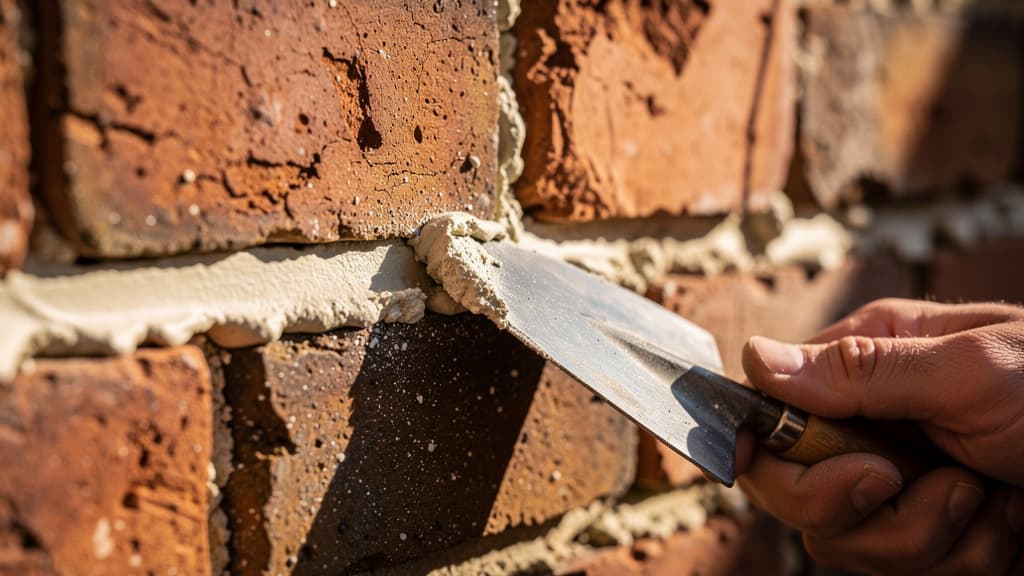
New England is full of beautiful old masonry: brick colonials, stone foundations, brownstone facades, and chimneys that have stood for a century or more. When the mortar in those buildings starts to fail, the fix is repointing: raking out the deteriorated mortar and replacing it. It sounds simple. But the single most important decision in the whole job is one most homeowners never hear about: which mortar to use. Get it wrong, and you can do permanent harm to a building that survived 150 winters.
Old buildings were built to breathe
Historic masonry was laid with lime mortar, a soft, flexible, vapor-permeable material. That softness isn't a flaw; it's the design. Lime mortar lets a wall absorb small amounts of moisture and then release it through the joints as vapor. The mortar is meant to be the "sacrificial" element: slightly softer than the brick or stone, so that any movement or moisture stress is taken up by the mortar joints rather than the masonry units themselves.
Older brick, especially soft handmade brick, is relatively porous and fragile compared to modern fired brick. The lime mortar around it was matched to that softness on purpose.
What modern cement does to old masonry
After Portland cement became standard in the 20th century, it became the default for almost all masonry work. It's strong, fast-setting, and cheap, perfect for new construction. But on a historic wall, it's the wrong tool, for two reasons:
-
It's too hard. Portland cement is far stronger and stiffer than soft historic brick. When the wall expands, contracts, or settles, the hard mortar no longer flexes, so the stress goes into the brick instead. The result is spalling: the faces of the brick crack and pop off, often within a few years.
-
It traps moisture. Dense cement mortar doesn't breathe. Water that gets into the wall can no longer escape through the joints, so it forces its way out through the brick, carrying salts and freeze-thaw damage with it. In effect, the repointing job designed to protect the wall starts destroying it.
The cruel part is that this damage isn't always obvious right away. A cement repointing job can look crisp and tidy for a season or two before the surrounding brick begins to deteriorate.
Matching mortar is a craft, not a guess
Proper historic repointing means matching the original mortar, not just its appearance, but its composition and behavior. A skilled mason considers:
- Strength and softness: the mortar should be slightly softer than the masonry units, never harder.
- Permeability: it needs to breathe so the wall can dry.
- Color and texture: matched so the repair blends with the original.
- Joint profile: the shape and finish of the joint, which affects both looks and how water sheds off the wall.
This is why historic restoration is a specialty. The right lime-based mix for a 19th-century brownstone is different from what a fieldstone foundation needs, which is different again from a soft-brick farmhouse chimney.
How to tell if your masonry needs repointing
You don't have to be an expert to spot the early signs:
- Mortar joints that are cracked, crumbling, or receding below the face of the brick.
- Gaps you can see daylight through or feel a draft from.
- Bits of sandy mortar collecting at the base of a wall or chimney.
- Brick faces that are flaking or popping, often a sign that previous (incorrect) repointing is already doing damage.
Protecting the buildings worth keeping
Historic masonry, done right, can last another century. Done wrong, it can be ruined in a few years. If you own an older home, chimney, or building, insist on a mason who understands lime mortar and takes the time to match the original, not one who reaches for a bag of premixed cement.
That's the work Champs Masonry & Chimney specializes in. If your historic masonry is showing its age, reach out for an evaluation and we'll tell you honestly what it needs.